
Natural makeup is not one beige look and it is not a test of how little product you can use. It is makeup that works with the face in front of you: real texture, real undertones, and the amount of coverage or color that makes you comfortable.
These looks are small variations rather than total transformations. You can borrow one idea—soft brown liner, cream blush, a brushed brow—or combine several. The best everyday routine is the one that survives your commute, your lighting, and the moment you catch your reflection without making you feel disguised.
1. Sheer skin tint with a softly brightened center

A sheer skin tint evens the overall tone while allowing freckles and natural variation to remain visible. Apply a thin layer from the center of the face outward, where most people need less coverage.
Add a small amount of concealer only beside the nose, under the inner corners of the eyes, or over a mark you want to soften. The outer face stays lighter, so the result looks like skin rather than a complete mask.
2. Concealer-only makeup for quick mornings

On days when foundation feels unnecessary, use concealer as a spot tool. Choose a flexible formula close to your skin tone and tap it onto redness or discoloration in thin layers.
Give each small placement a few seconds to settle before blending the edges. That keeps the coverage where you need it. Finish with moisturizer or sunscreen underneath so the uncovered skin looks as cared for as the concealed areas.
3. Cream blush placed high and diffused

Cream blush brings life back quickly because it adds both color and a slight skin-like sheen. Place it a little above the apples of the cheeks and blend upward, stopping before it reaches the under-eye area.
Use the leftover color on the brush or fingertips across the bridge of the nose if you like a sun-touched effect. Rose, berry, peach, terracotta, and muted coral can all look natural when they echo your undertone.
4. Brushed brows with a few precise strokes

Brush the brow hairs upward and outward before adding color. Often, the shape already looks fuller once the hairs are sitting in the right direction.
Fill only the gaps with a fine pencil or pen, using short strokes rather than drawing a solid top and bottom line. A clear or tinted gel can hold the front softly while giving the tail a little more structure.
5. Brown tightline and softly defined lashes

A deep brown pencil pressed close to the upper lash line can make the lashes look denser without reading as obvious eyeliner. Keep the line thinnest at the inner corner and slightly fuller toward the outer third.
Smudge the edge before it sets. One coat of mascara, concentrated at the roots, completes the definition. Brown-black or soft black usually gives enough contrast for daytime without taking over the whole look.
6. A wash of taupe over the eyelids
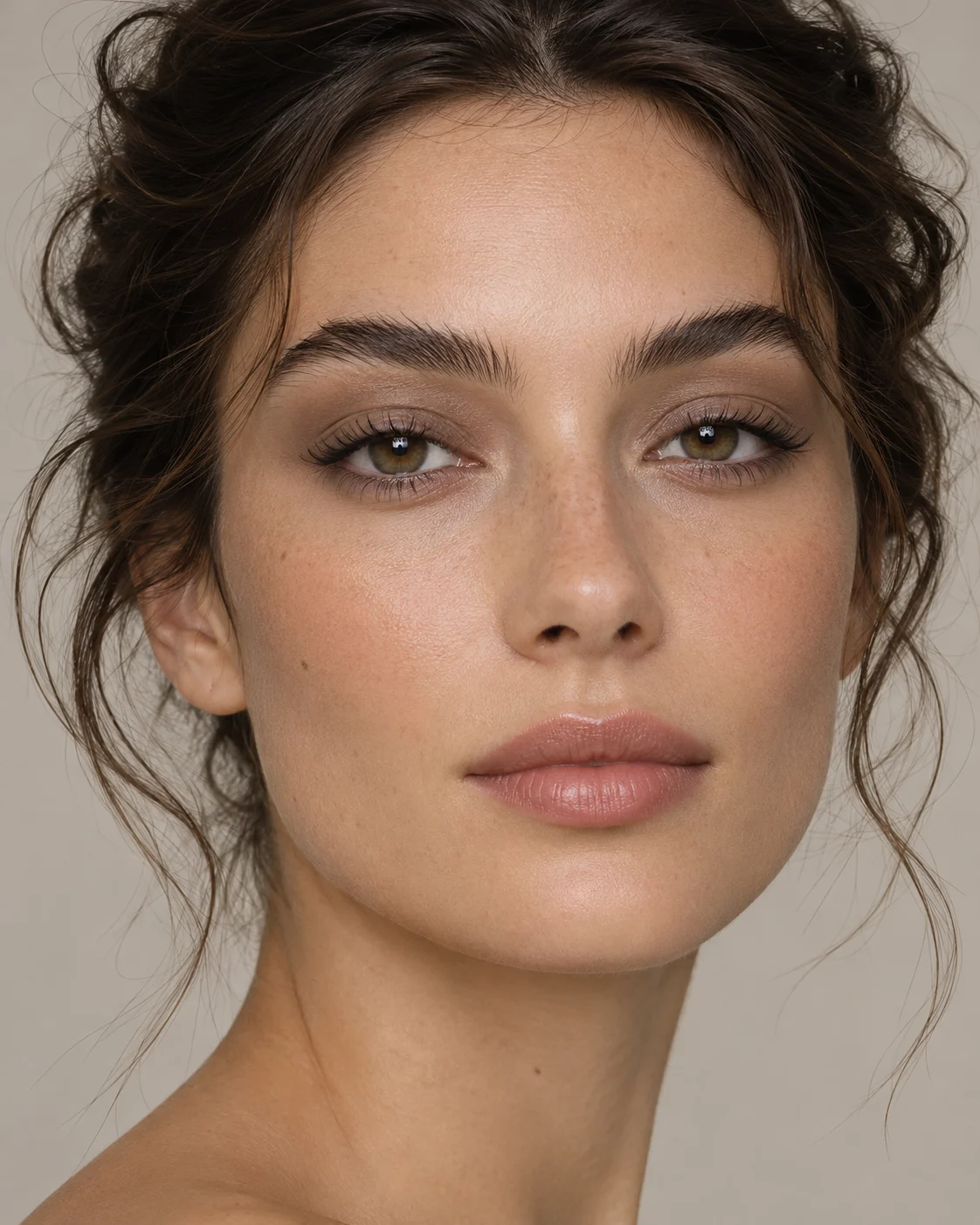
Taupe is useful because it sits between brown, gray, and muted mauve. Sweep a soft version over the lid and blend the edge just above the crease.
The shade should be visible when you blink but not create a hard border. Matte looks quietly sculpted; satin catches light without becoming glittery. Use the same shadow on a small brush beneath the outer lower lashes for balance.
7. Mascara focused at the roots, not the tips

If mascara tends to look heavy, place the wand at the roots, wiggle gently, and pull through once. The base gains definition while the ends stay separated.
Comb through any clumps before the formula dries. Curling the lashes first can make a bigger difference than adding three coats. For very light lashes, brown mascara gives a softer frame; deeper lashes may suit black or brown-black.
8. Monochrome peach on eyes, cheeks, and lips

Repeating one color family makes a look feel pulled together with little effort. A muted peach or warm rose can be blended lightly over the cheeks, tapped across the lids, and echoed with a tinted balm.
The products do not have to be identical, and not every cheek formula is suitable for the eyes. Match the tone rather than using one product everywhere. Keep the placement sheer so the repetition feels intentional, not theatrical.
9. Soft bronze with fresh skin

Bronzer looks most natural when it warms the places light reaches rather than drawing a new face shape. Sweep a small amount around the temples, across the upper cheeks, and very lightly over the bridge of the nose.
Choose a shade that looks like warmth on your skin, not an orange or muddy stripe. A large, soft brush gives a diffused result. Cream works well on bare skin; powder can sit neatly over a light base.
10. Rosy cheeks with a comfortable lip stain

A rosy cheek and blurred lip make the face look lively even when the eyes are nearly bare. Blend blush in thin layers, then press a stain or lipstick onto the center of the lips and soften it outward.
Top with balm if stains feel dry. The cheek and lip colors only need to belong to the same family; an exact match can look flatter than a little natural variation.
11. Satin skin with shine controlled only where needed

Natural skin is not equally matte everywhere. Keep a satin finish over the cheeks and use a small brush to powder only the areas that become distracting, such as beside the nose, between the brows, or under glasses.
Press powder rather than sweeping it across the whole face. This preserves dimension and avoids building texture on dry areas. A tissue can remove excess surface shine before you add more product.
12. Freckle-friendly makeup with selective coverage

If you want freckles to remain visible, use a sheer base and place concealer with a small brush directly on individual marks or areas of redness. Blend only the edges.
Avoid piling coverage over the whole cheek and then trying to redraw every freckle. A light hand keeps the skin believable. Warm blush and softly defined brows are often enough to finish the look.
13. Glasses-friendly definition

Frames can cast shadows, so a little brightness at the inner corners and definition along the lashes helps the eyes stay visible. Keep concealer thin where the glasses rest to reduce creasing.
Curl the lashes if they touch the lenses, and concentrate mascara at the base. Groomed brows balance the upper edge of the frames. Lip color can carry the look when you prefer to keep the eyes very simple.
14. A five-minute polished workday face

For a fast routine, choose five jobs rather than five specific products: even where needed, add color, define brows, define lashes, and moisturize the lips. That may mean concealer, cream blush, brow gel, mascara, and tinted balm.
Keep the products together in one small bag so the routine does not begin with searching. The look becomes quicker through repetition, not by rushing the blending. Stop when you look ready, not when every possible step has been completed.
15. Keep the finish human

Check natural makeup in natural light when possible. Step back from the mirror, because a face is seen as a whole—not from three inches away. If one area feels heavy, soften its edges before adding something elsewhere to compensate.
You do not have to hide texture, erase every shadow, or choose neutral colors to look natural. A quiet berry lip, visible freckles, luminous cheeks, or a strong brow can all belong in an everyday look. The most convincing finish is the one that lets your features remain the subject.