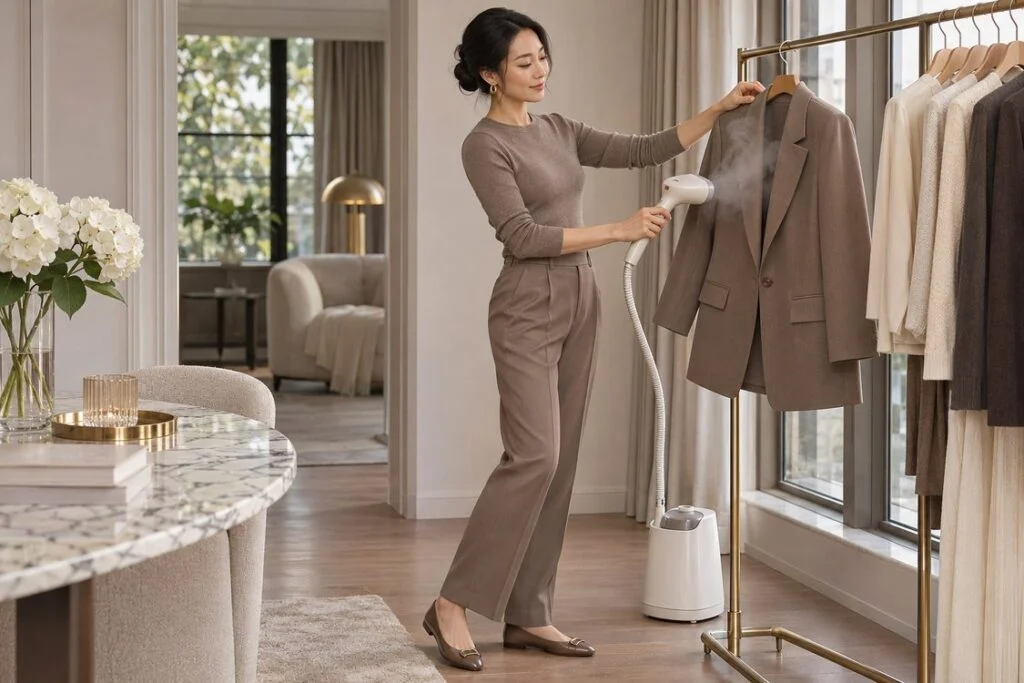

A capsule wardrobe sounds wonderfully calm in theory: a small rail of beautiful clothes, everything matching, and no bad outfit days. Real wardrobes are less tidy. They contain work clothes, sentimental pieces, weather-specific layers, and the dress you love even though it only comes out twice a year.
The point is not to force your life into a strict number of hangers. A useful capsule simply makes your everyday choices easier. It gives you a reliable core, leaves room for personality, and helps you see what is genuinely missing before you shop.
1. Begin with the week you actually live

Before thinking about colors or clothing counts, write down what an ordinary week looks like. How many days are spent at work, at home, commuting, meeting friends, caring for children, exercising, or attending events? Your wardrobe should reflect those proportions.
If most of your time is casual, a rail full of occasion dresses will not solve daily dressing. If you work in a formal setting, three pairs of jeans are not a complete foundation. Build for your real calendar, not an imagined version of yourself.
2. Do a two-week outfit observation
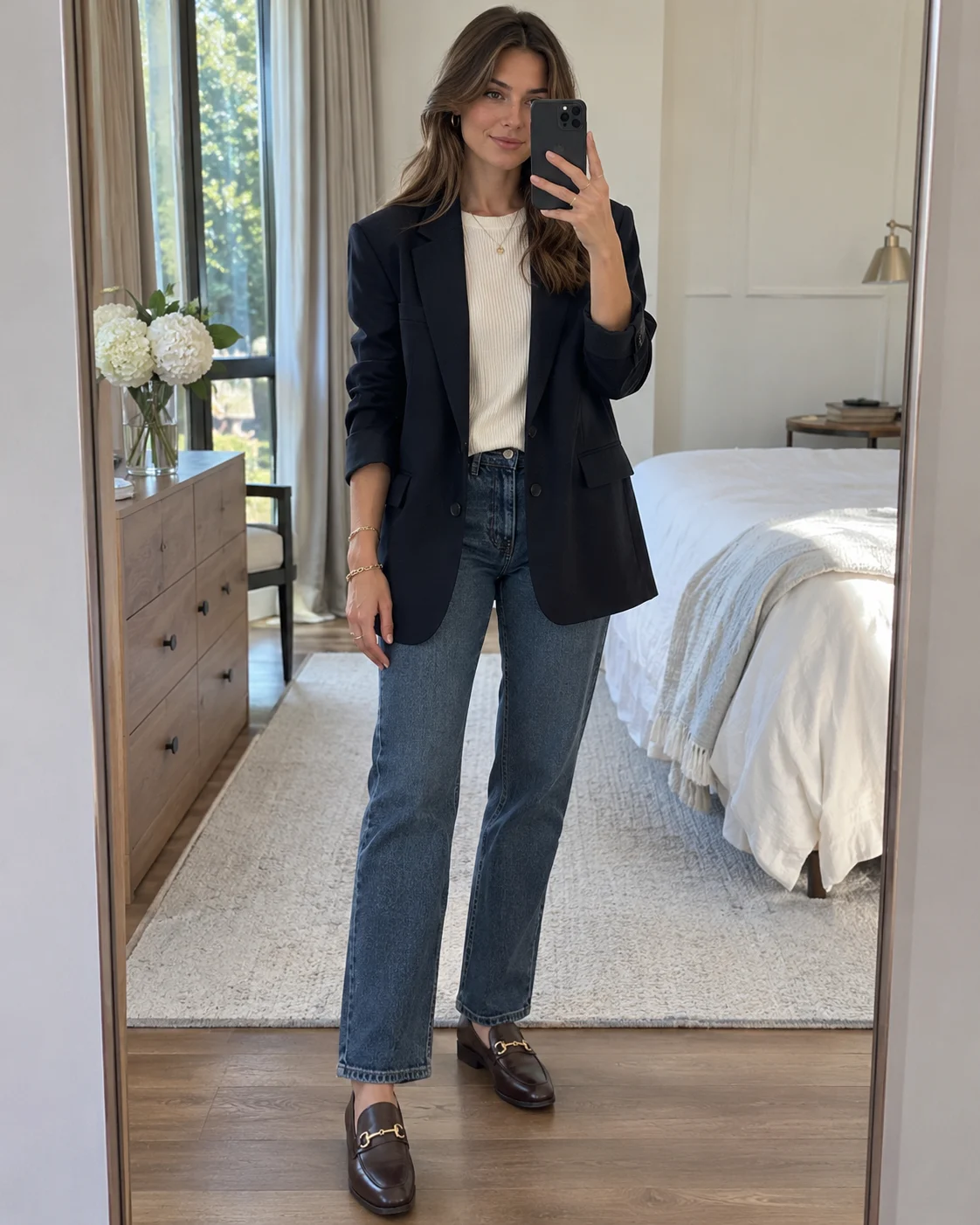
For two weeks, take a quick mirror photo or make a short note about what you wear. Record the pieces you reach for, what felt comfortable, and what annoyed you by lunchtime. This small experiment is more useful than trying to remember your habits during a big wardrobe clear-out.
Patterns appear quickly. You may discover that you love wide trousers but avoid one pair because the waistband pinches, or that your favorite blazer works only with one top. Those details tell you what deserves space in the capsule.
3. Edit in three honest groups

Take clothing out by category and sort it into three groups: wear often, wear sometimes, and do not wear. The last group is not an automatic donation pile. Try each item and identify the actual issue—fit, condition, color, comfort, styling, or a lifestyle that has changed.
Repair or tailor pieces that have a clear place in your week. Store genuine occasion wear separately if it does not need daily access. Let go of items that repeatedly make you feel wrong, even if they were expensive. The money has already been spent; keeping the mistake visible does not recover it.
4. Choose a flexible color story

A capsule is easier to combine when most pieces share a workable color story. Start with two or three core neutrals you already wear—perhaps navy, cream, and denim; or black, charcoal, and camel. Then add two or three accent colors that make you look and feel awake.
The colors do not all need to match perfectly. They simply need enough overlap to create outfits. Photograph potential combinations in daylight; subtle undertones are easier to see in a photo than under warm bedroom lighting.
5. Select the bottoms that anchor your outfits
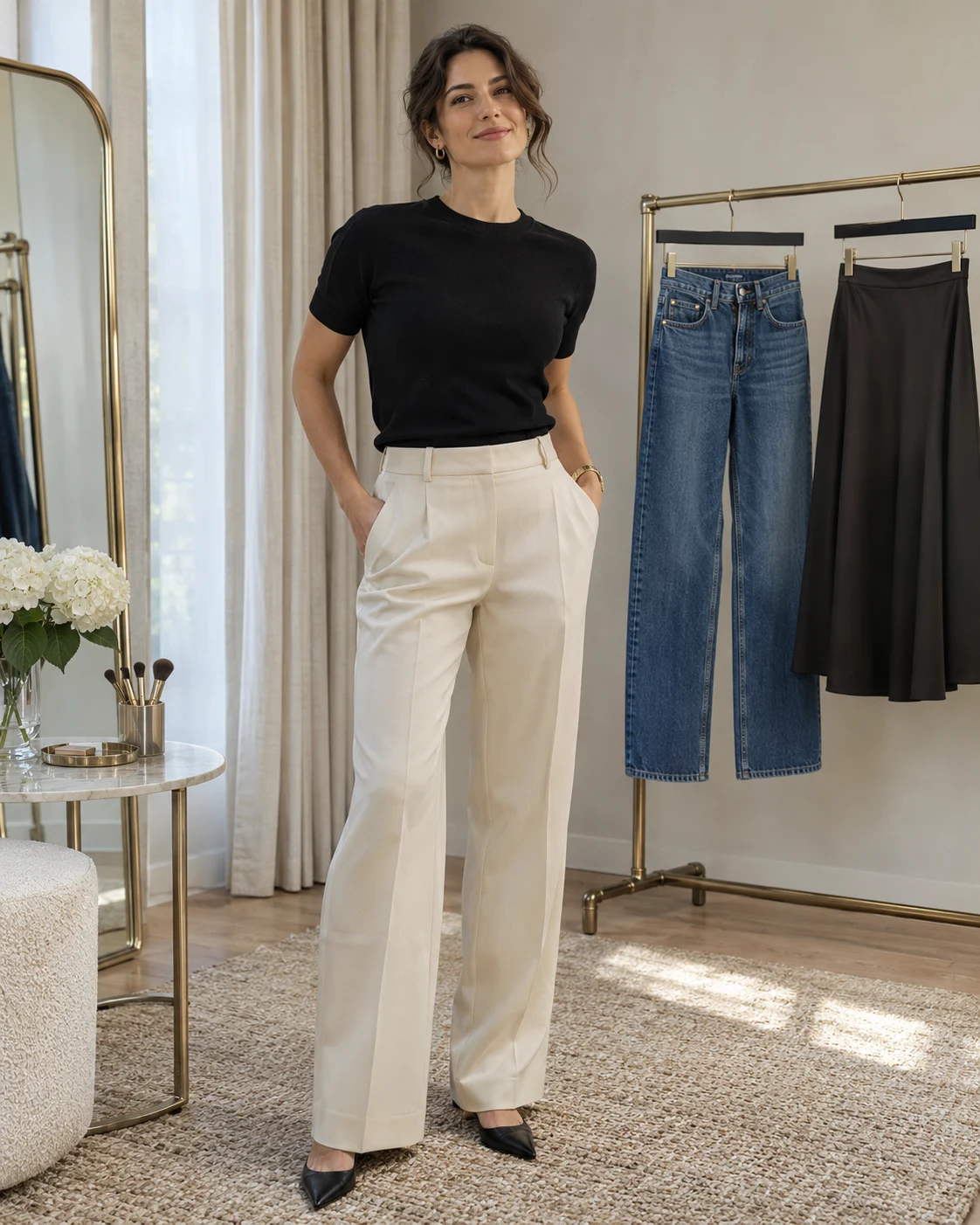
Bottoms create the outline of an outfit, so choose them before buying more tops. A practical capsule might include straight jeans, relaxed trousers, a skirt, and a warm- or hot-weather option. Your exact mix should follow your routine.
Every pair should work with at least three tops and two shoes. Sit, walk, and bend in them before deciding. A beautiful trouser that demands constant adjustment is not a dependable capsule piece.
6. Build a small range of useful tops
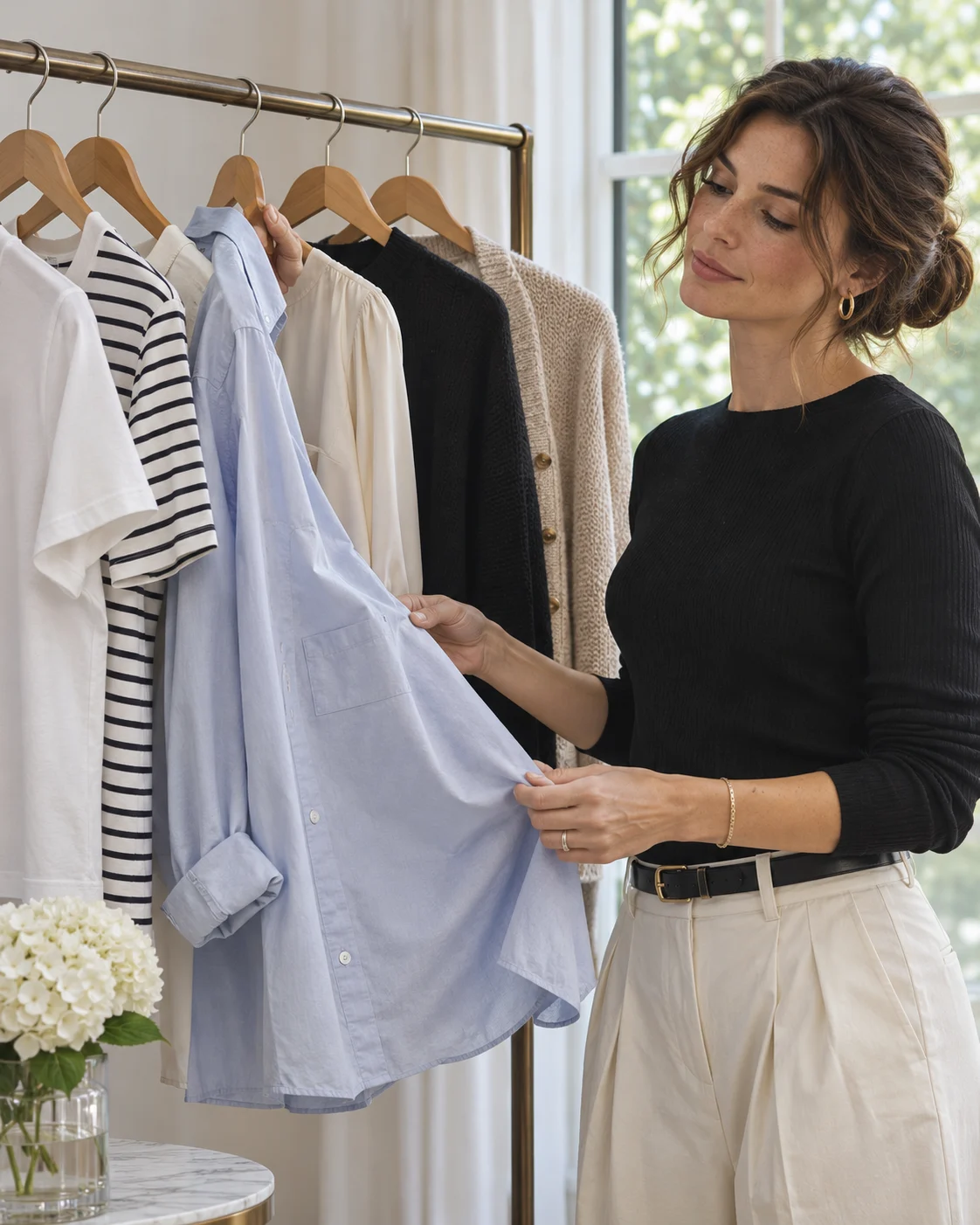
Choose tops in different levels of polish: simple tees or tanks, one or two shirts, a fine knit, and perhaps a blouse that can move from work to dinner. Vary necklines and sleeve lengths so the outfits do not feel like repeats.
Fabric matters more than quantity. A cotton tee that holds its shape, a shirt that does not gape, and a knit that feels good against the skin will be worn more often than several almost-right versions.
7. Add layers that change the mood
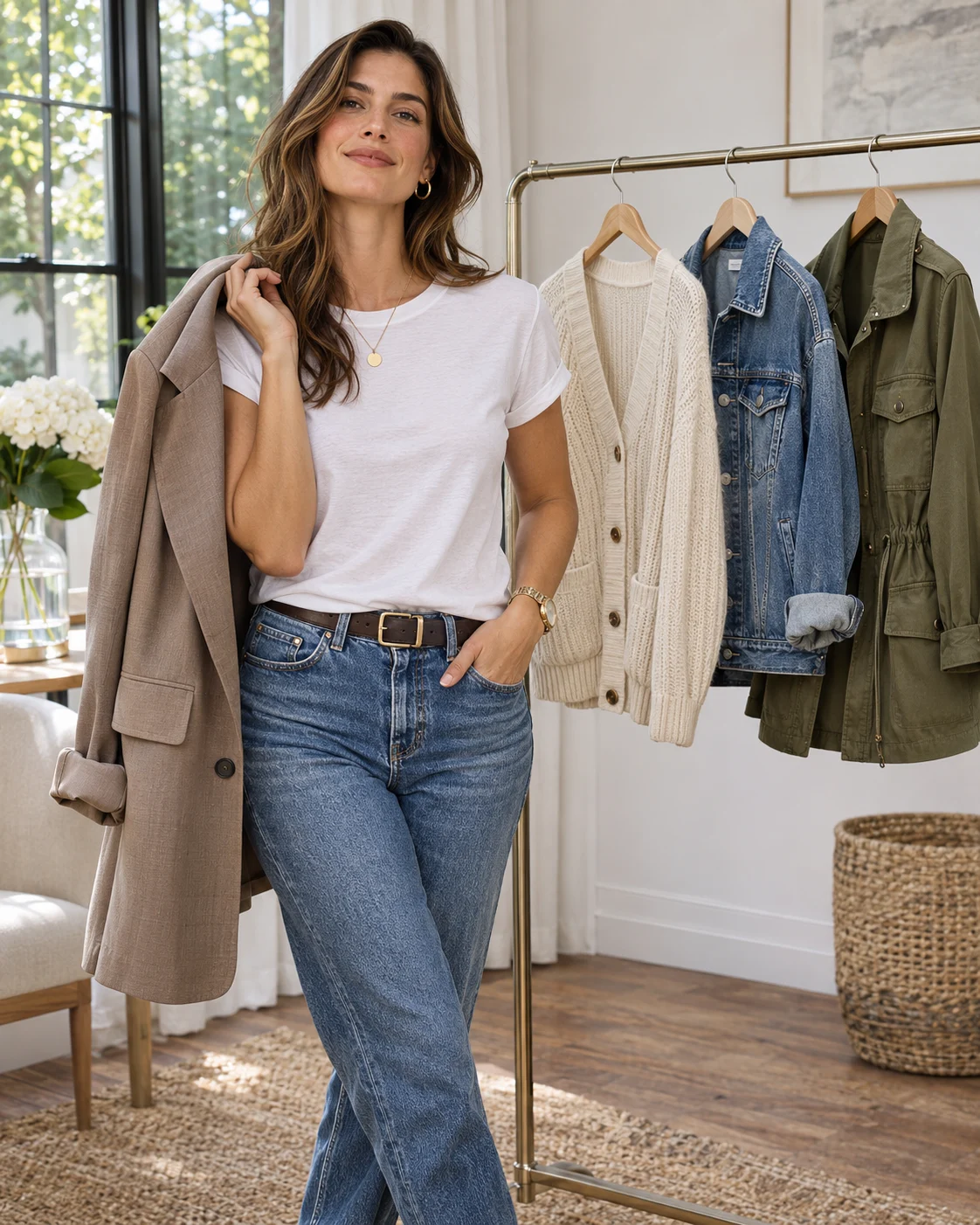
Layers make a compact wardrobe feel much larger. A cardigan softens jeans and a tee; a blazer sharpens them; a denim or utility jacket makes a dress more casual. Aim for layers that fit over your chosen tops without pulling at the shoulders.
Think about indoor as well as outdoor use. A heavy coat may be necessary, but it does not replace a light layer you can keep on at work, in a cafe, or while traveling.
8. Keep dresses and one-piece outfits purposeful

Dresses and jumpsuits can be extremely efficient because the outfit is nearly complete. Keep the shapes that suit your day-to-day life and can be changed with shoes or a layer. A simple midi dress may work with sneakers, boots, a cardigan, or a blazer.
You do not need to make every dress casual. Occasion pieces can live outside the core capsule. The important question is whether each one-piece item has a clear job and feels comfortable for the full length of that job.
9. Choose shoes by mileage, not fantasy
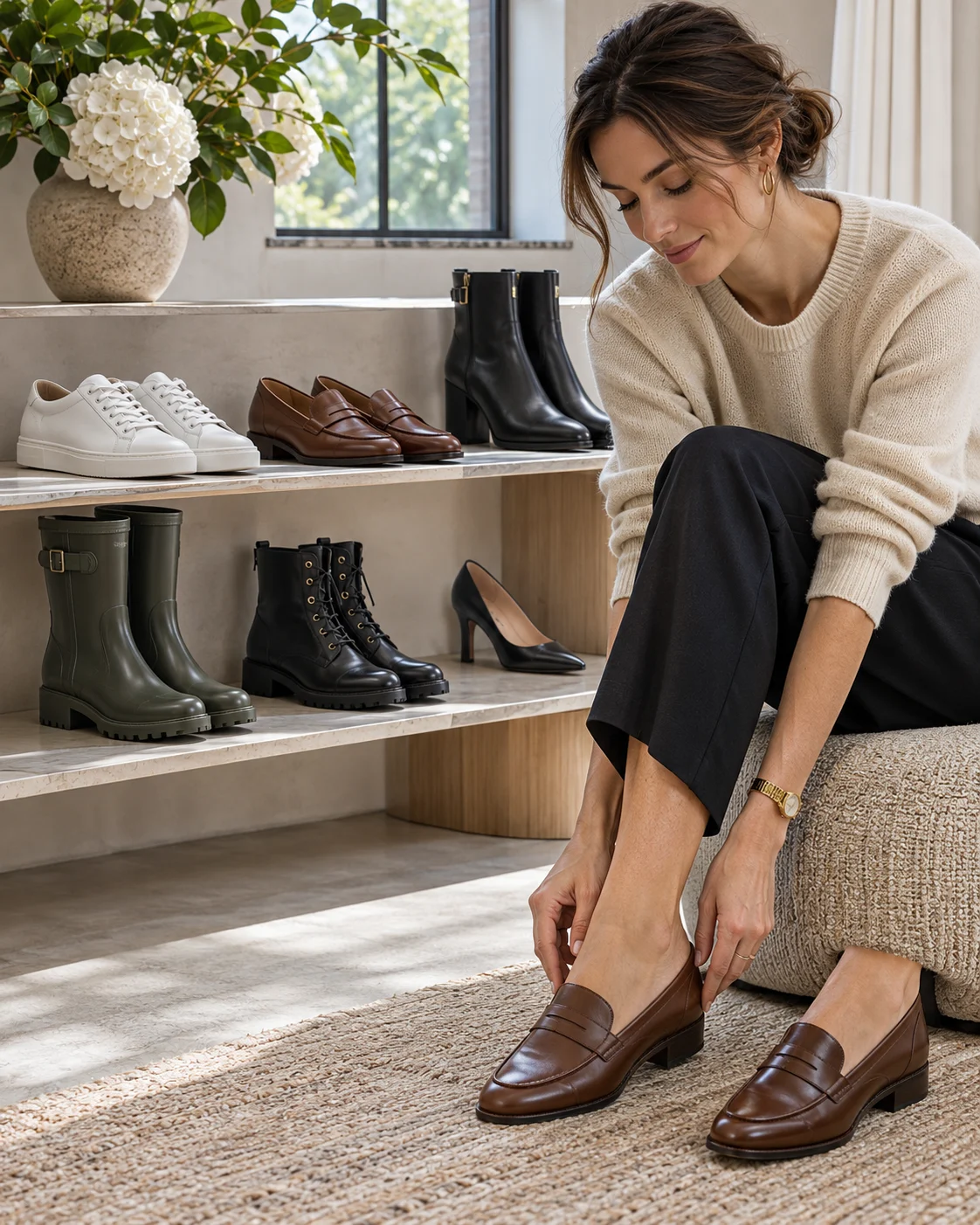
A capsule usually needs fewer shoe categories than people expect, but each pair must be dependable. Consider an everyday sneaker, a flat or loafer, an ankle boot, a weather-specific option, and one dressier shoe if your life calls for it.
Try shoes with the actual hems you plan to wear. The right trouser length for a sneaker may look awkward with a delicate flat. Comfort is part of style: limping or changing shoes halfway through the day will never make an outfit feel successful.
10. Use accessories to keep the capsule personal
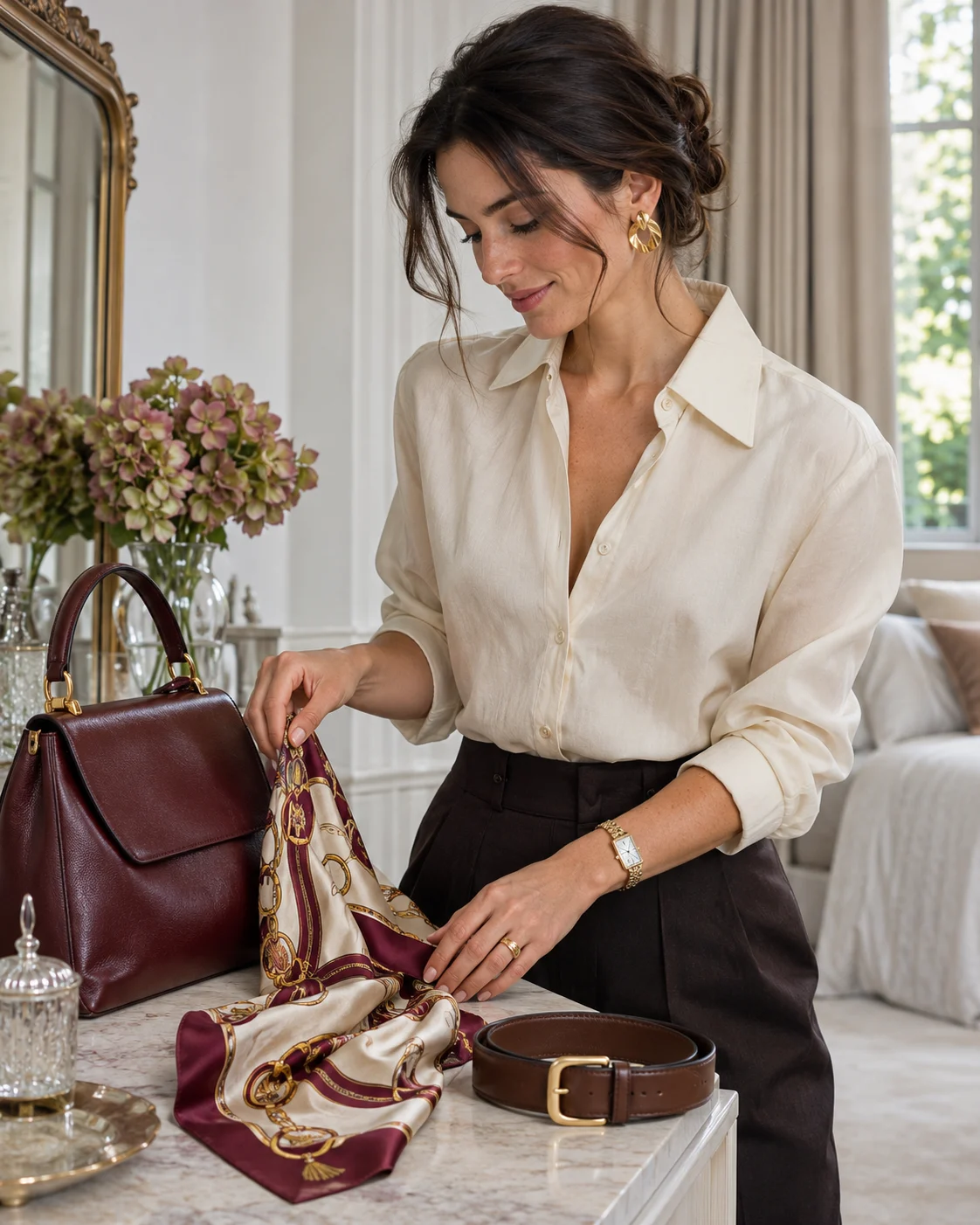
A neutral wardrobe can become anonymous if every personal detail is removed. Jewelry, belts, scarves, bags, and eyewear give repeated outfit formulas a different point of view. Keep the accessories you genuinely use visible and easy to reach.
Choose a few signatures rather than a crowded drawer of near-duplicates. That might be sculptural earrings, a red bag, a silk scarf, or a wide leather belt. Personality does not require clutter.
11. Test a ten-day outfit plan

Before shopping for gaps, create ten complete outfits from the edited wardrobe. Photograph each one, including shoes and outerwear. Wear several of them in real life and note where the plan breaks down.
A gap should describe a function, not a vague desire. 'A breathable navy shirt that works with cream trousers and both skirts' is useful. 'More cute tops' is not. Specific gaps prevent random purchases.
12. Shop slowly and review each season

Add one missing piece at a time and test it with the wardrobe before removing tags. Check whether it creates at least three outfits, works with your preferred undergarments, and suits the care routine you are willing to maintain.
Review the capsule when the weather or your schedule changes, not every time a trend appears. Rotate seasonal pieces, repair what needs attention, and note true gaps. A capsule should evolve with your life rather than becoming another set of rules.
Your capsule should feel like you
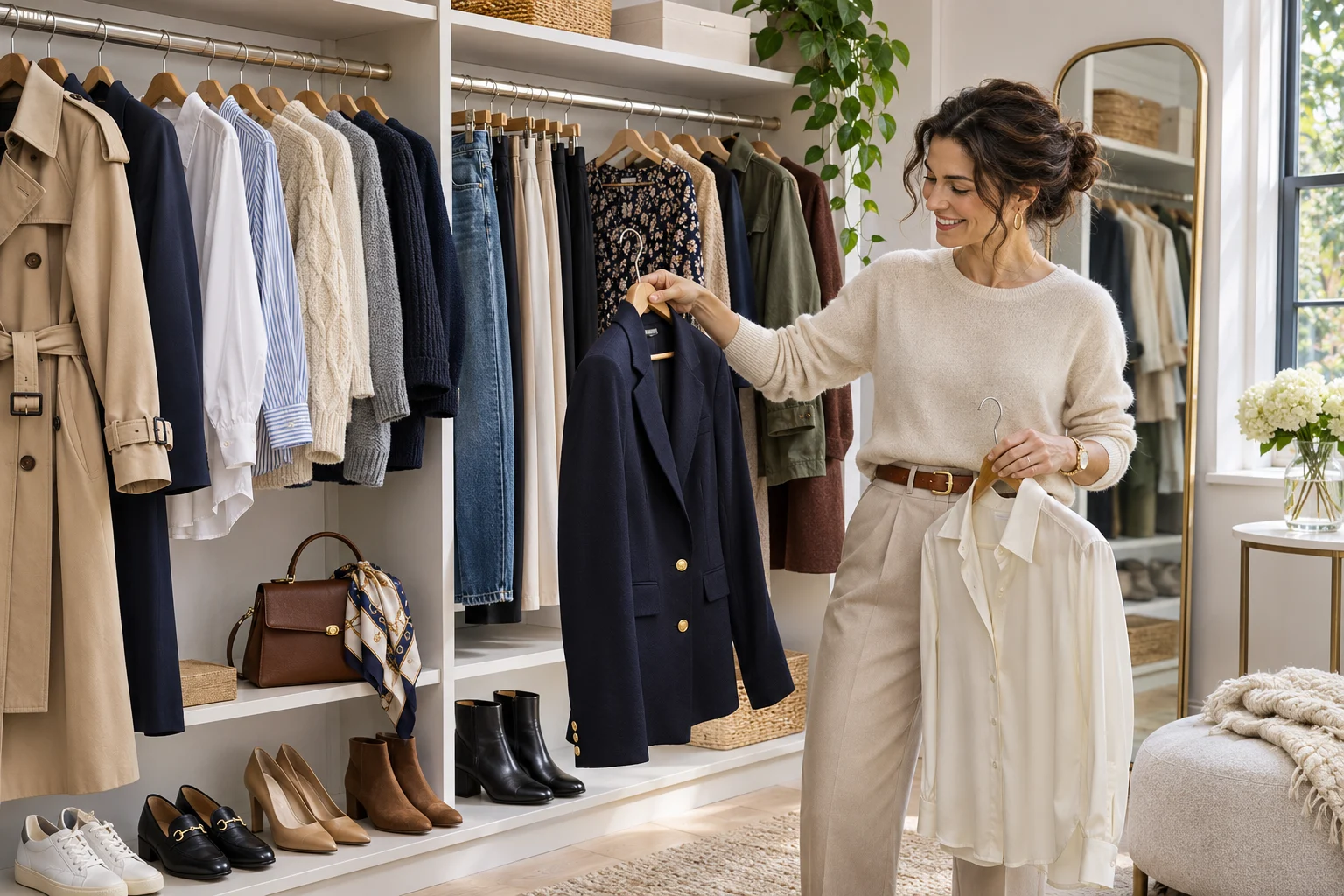
A successful capsule wardrobe is not the smallest possible wardrobe. It is the one that helps you get dressed with less friction and more confidence. Some women will thrive with thirty pieces; others need more because of work, climate, or family life.
Keep the clothes that earn their place, leave room for delight, and let repetition become a strength. Personal style often becomes clearer when the noise is reduced—not when every interesting piece disappears.