
You can usually tell where a winter outfit goes wrong the moment you reach for your keys. The sweater sleeve has crept halfway up your arm, or the coat that fit yesterday pulls across the shoulders today. Before you buy a larger coat, try changing the layer underneath.
These 15 ways to layer winter clothes for men start with the pieces closest to your skin and work outward. Use the tip that solves the problem you feel first, whether that’s a draft at the collar or too much fabric under the arms.
1. Start with a thin merino base layer
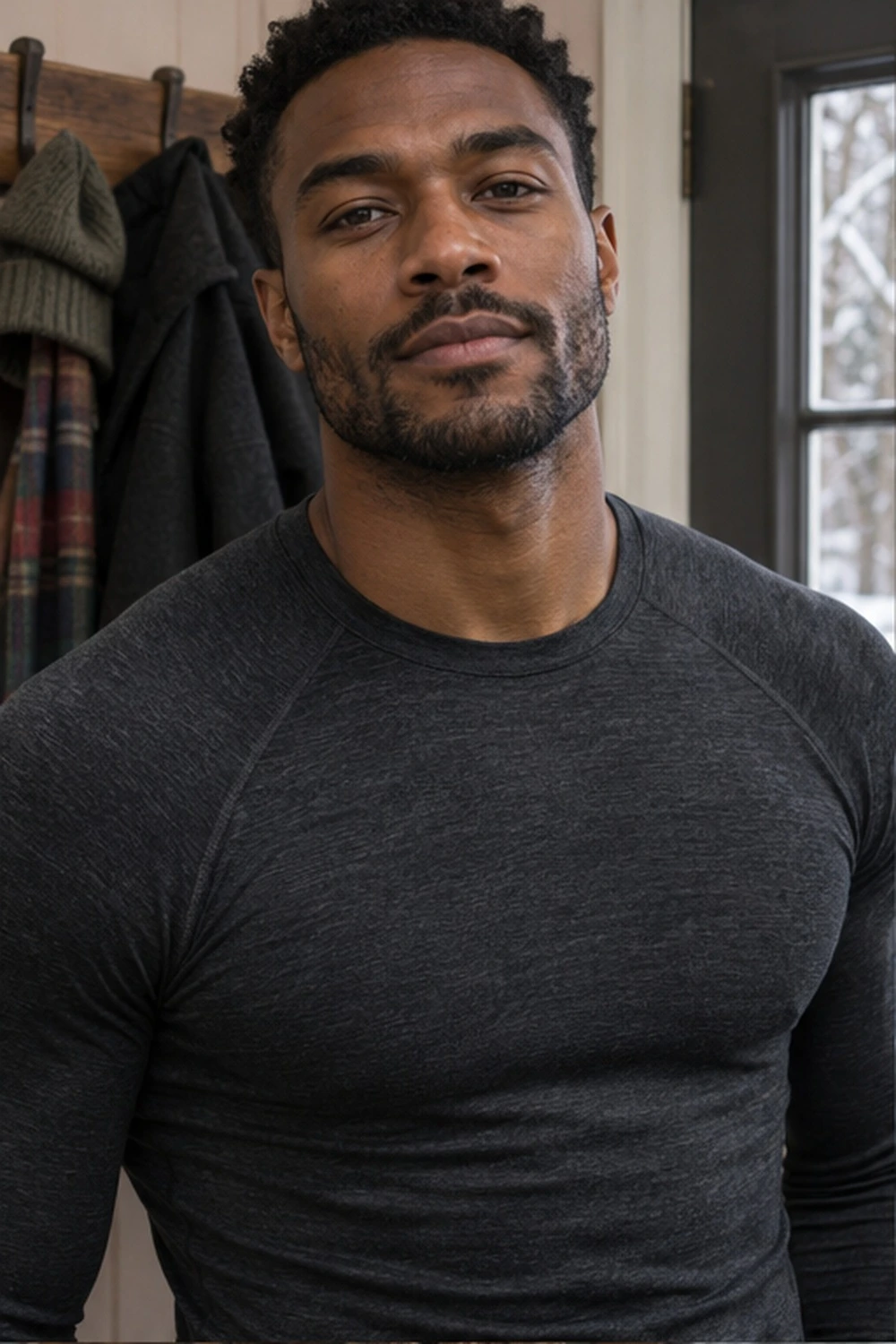
Pull your usual work shirt over a thin merino top. If the neckline peeks out or the shirt catches at the elbows, try a lower neck or smoother sleeves. A comfortable base follows your body closely enough to stay put as you dress, with enough give to reach an overhead rail.
2. Build from lightest to heaviest
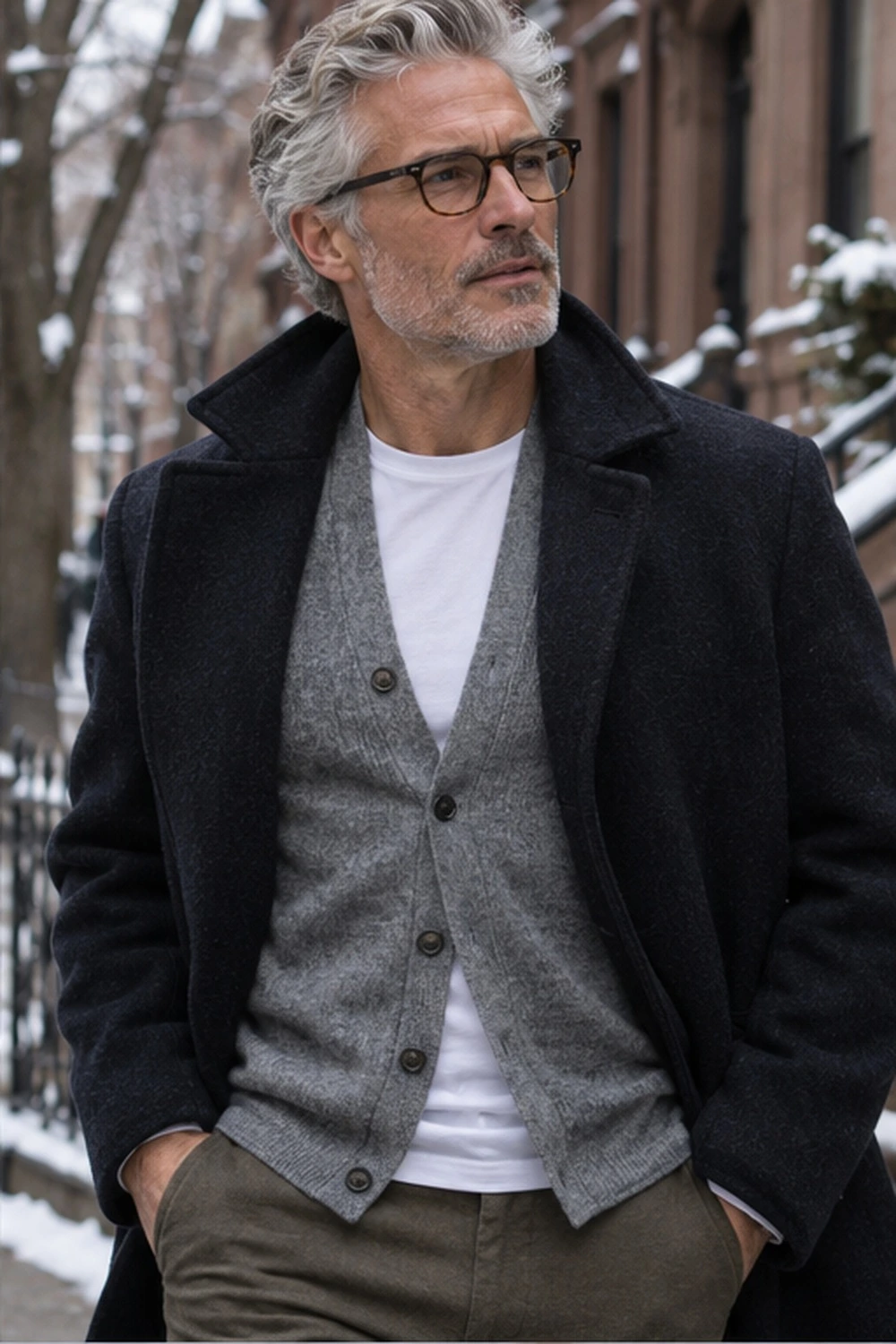
Lay a tee, a fine cardigan and a wool coat on the bed in the order you’ll put them on. Run your hand down each sleeve as you dress. The cardigan should glide over the tee, and the coat should close without dragging the knit toward your throat.
3. Choose fine-gauge knitwear

A fine crewneck leaves just enough room for an Oxford collar at the neck and a sliver of cuff at the wrist. For a cleaner line under a blazer, try a thin roll neck on its own. Check the upper arms in the mirror, where bunching tends to show first.
4. Use a thin down vest under a coat

On a cold platform, a lightly quilted vest can make the coat you already own more useful. Zip the vest over a fine sweater, then close the coat. If the front buttons strain or the quilting flattens completely, you’ll get a better fit with a thinner vest or roomier coat.
5. Make an unstructured blazer the middle layer
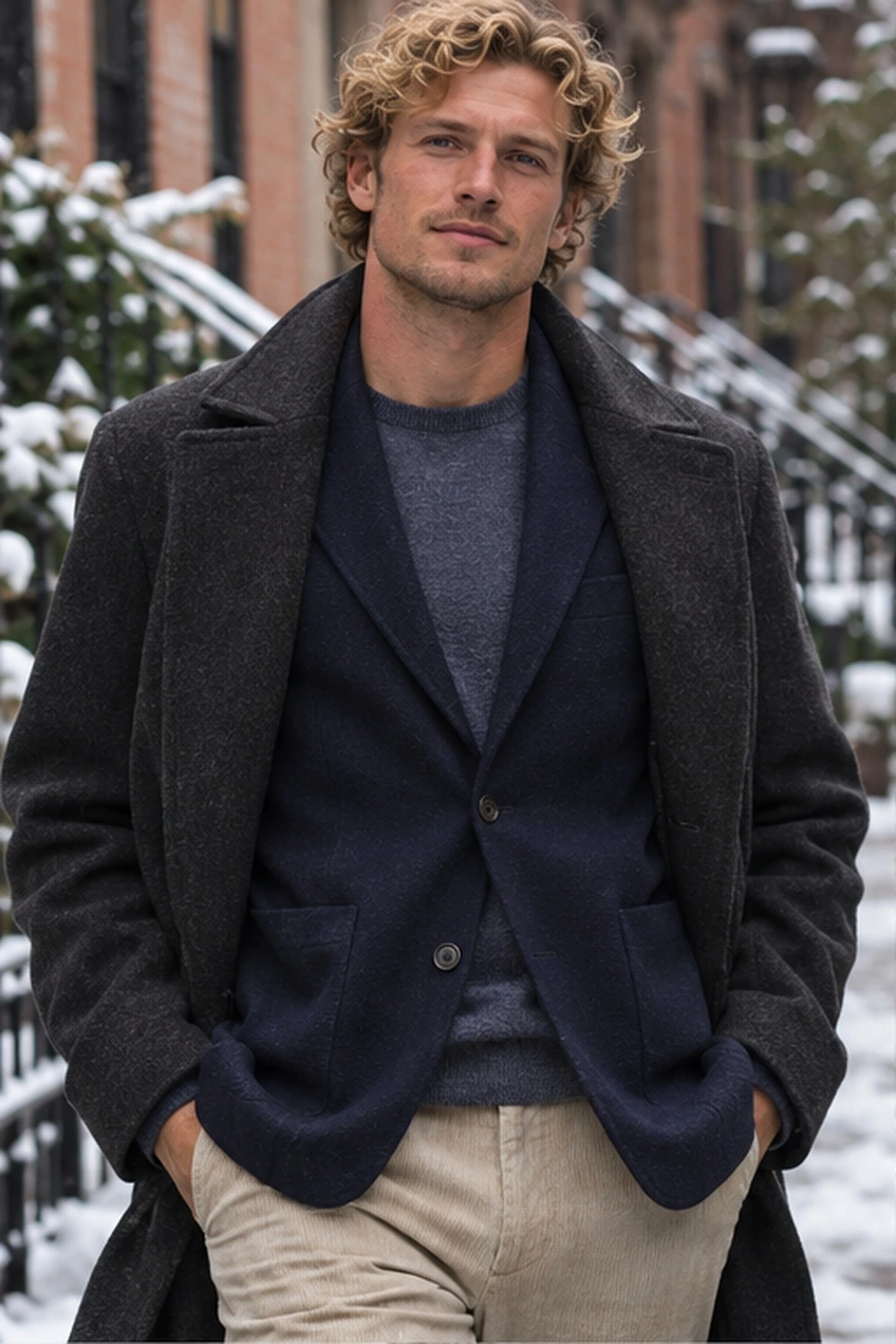
For a day of meetings, wear a soft-shouldered blazer over a fine knit. Slide the overcoat on and see where its shoulder seam sits. The blazer should settle underneath without making a ridge, and still look tidy when you hang up the coat indoors.
6. Layer a thin shirt jacket beneath an overcoat
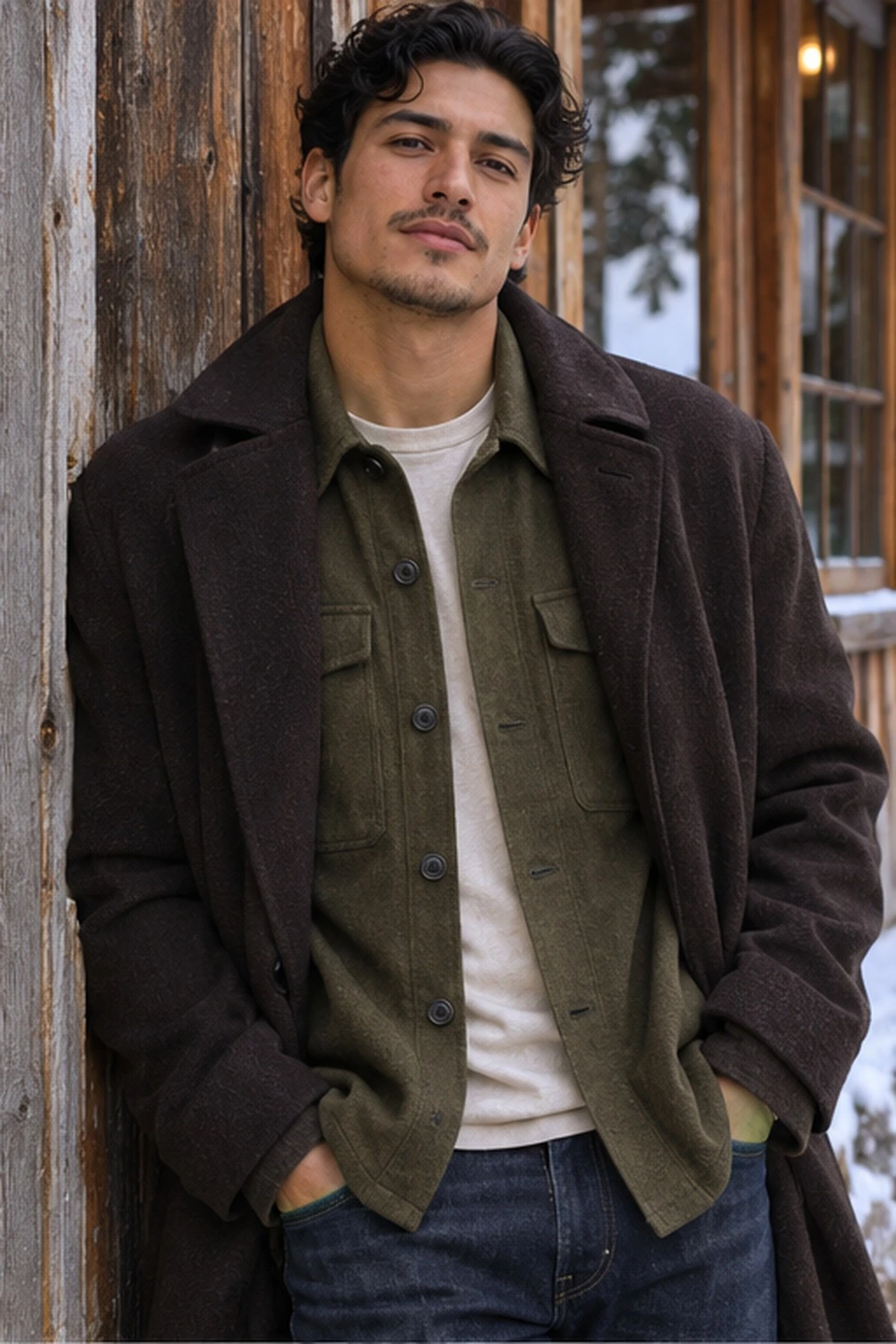
Think of the shirt jacket as a button-down you can wear open at lunch. Pick one with flat pockets and a soft collar. Over a plain tee and beneath an overcoat, it gives you a useful indoor layer. Keep your keys in the outer coat so the middle pockets lie flat.
7. Keep hoodies slim and the hood flat

Put the hoodie on first, pull on the coat, then lift the hood clear of the collar and smooth it across your back. Turn sideways to check the neckline. A lighter sweatshirt and a hood that lies flat make this pairing easier to wear on a crowded train.
8. Use a tonal color palette
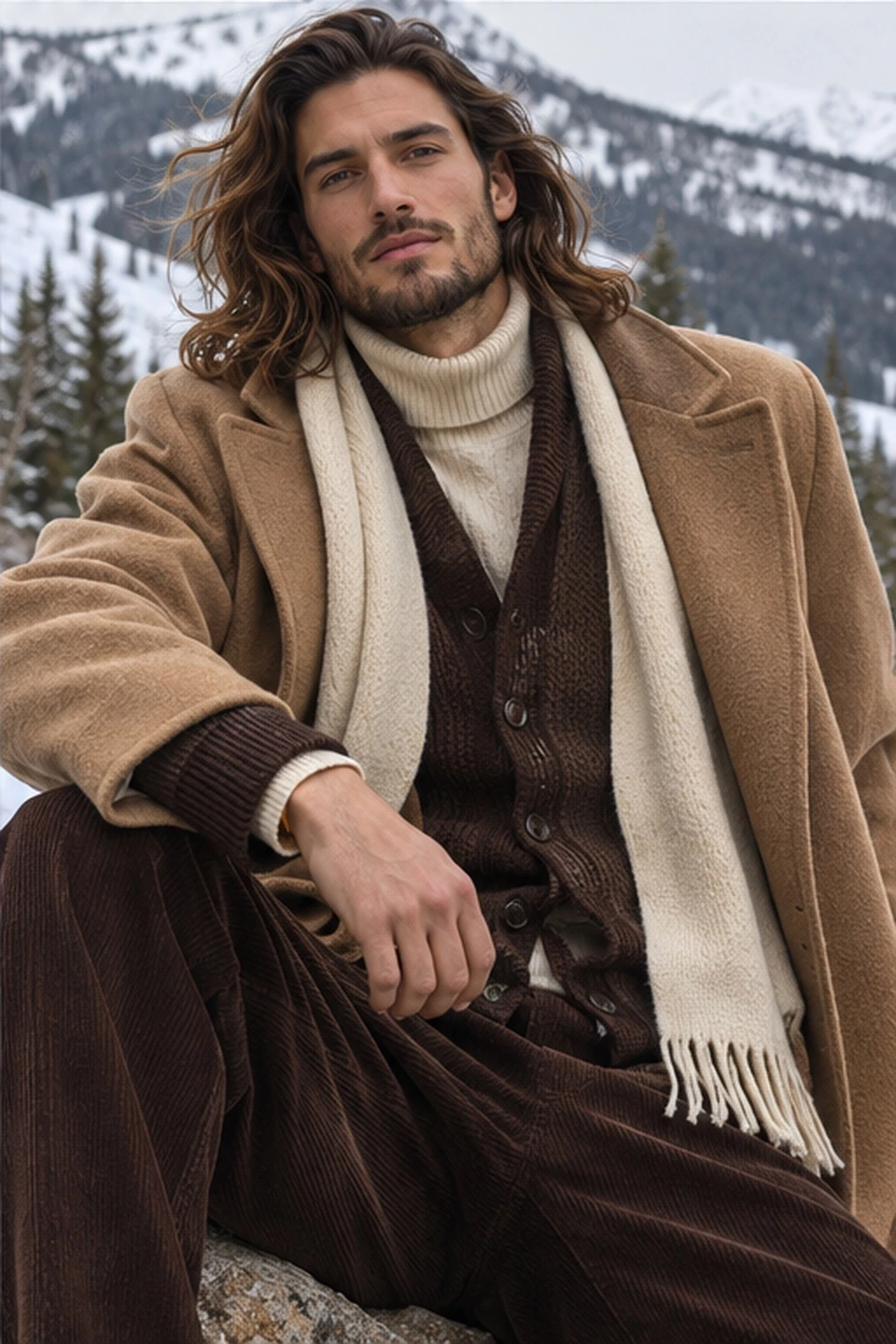
Cream, camel and chocolate give an outfit depth while keeping the layers easy on the eye. Try a cream knit under a camel coat with dark brown trousers. Color changes how the layers look together, so still check that the coat closes comfortably.
9. Graduate the garment lengths

Stand in front of a full-length mirror with the coat open. A sweater ending near the waistband, a jacket at the hip and a longer overcoat let you see where each layer ends. Tuck a long shirt tail if it hangs below the jacket and breaks up that line.
10. Reduce sleeve bulk with sleeveless insulation

If a coat fits across the chest but feels tight when you bend your elbows, start with what’s inside the sleeves. Trade a thick cardigan for a knitted vest over your shirt. You keep the extra fabric across your back and chest and free up room at the elbows.
11. Let a scarf provide adjustable warmth

Before adding another sweater, see whether the draft is coming through the collar. Wrap a soft wool scarf once and tuck the ends inside your coat. Leave enough space to turn your head. Once you step indoors, the scarf slips off without disturbing the rest of the outfit.
12. Layer beneath the trousers

If your legs feel cold on the walk to work, try thin thermal leggings under straight jeans or wool trousers. Sit down in the combination before you leave. Check the knees, waistband and ankles, especially where a legging cuff meets the top of a boot.
13. Choose one efficient insulated layer

Pick one insulating jacket for the day. A lightweight puffer can sit beneath a shell for a windy walk, provided the shell leaves room for the filling to loft. Reach forward with both layers zipped. If your shoulders bind, change the fit before adding anything else.
14. Buy outerwear with layering room

Bring the sweater and jacket you plan to wear when trying on a coat. Fasten it, sit down and reach into your pockets. Look for ease across the shoulder blades and enough sleeve width to move, then check that it still hangs neatly when you stand.
15. Create a modular outfit for changing temperatures

For a commute that runs from a cold platform to a heated office, try a merino tee, a thin zip cardigan and a weather-resistant mac. Open the mac when you board and adjust the cardigan once you warm up. At your desk, either inner layer can stay on without the coat.
A simple winter layering formula
Start with a thin base, add one layer for warmth, then choose the outer coat for the wind or rain you expect. Try the whole outfit with your bag on and your coat closed. If you can reach, sit and take off a layer easily when you arrive, it’s ready for the day.